
Originally written for Animation Obsessive, this is a slightly longer version of the article.
Niu Lai and Movements of Animated “Trash” in China
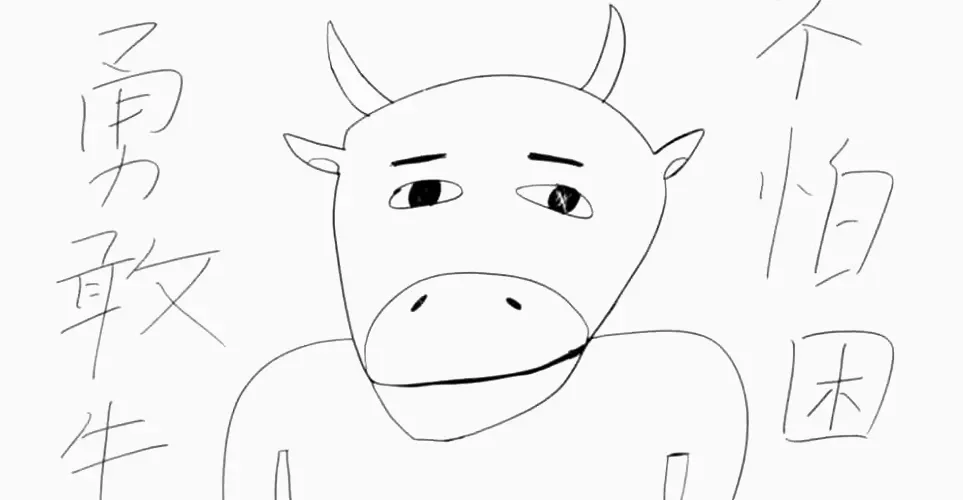
Detail of a handmade theatrical poster for Niu Lai, courtesy of Ivy Yeak on Facebook
The world is reverberating with laughter and terrified screams at the success of Niu Lai, a 2026 3D-animated film created in the architectural modeling software SketchUp by an amateur animator, Xin Yumeng, with a script written by his mother, Sun Lifeng. Niu Lai is one of the most profitable animated films ever made, generating $9.4 million at the Chinese box office on an estimated $23,800 investment. The film has become a meme in China, with theaters filled with audience members arriving in droves just to make fun of it. Niu Lai’s detractors dismiss its popularity, saying that the film’s success should be ignored, going as far as to suggest it should be pulled from theaters for “not being good enough”. However, I personally believe Niu Lai is indicative of a passionate creative drive that has been waiting under the surface of Chinese society for a long time, and can point us in a direction toward understanding the moment we’re currently in, both in China and abroad. This is a piece about using Niu Lai as a vantage point to observe Chinese animation, Most Trash Animation Festival, as well as independent animators who take paths away from mainstream Chinese animation. I have included interviews with my animator friends Sijia Luo, Pang Wen, Yingdan Lai, as well as Shangshan Ruoshui, founder of Most Trash Animation Festival.
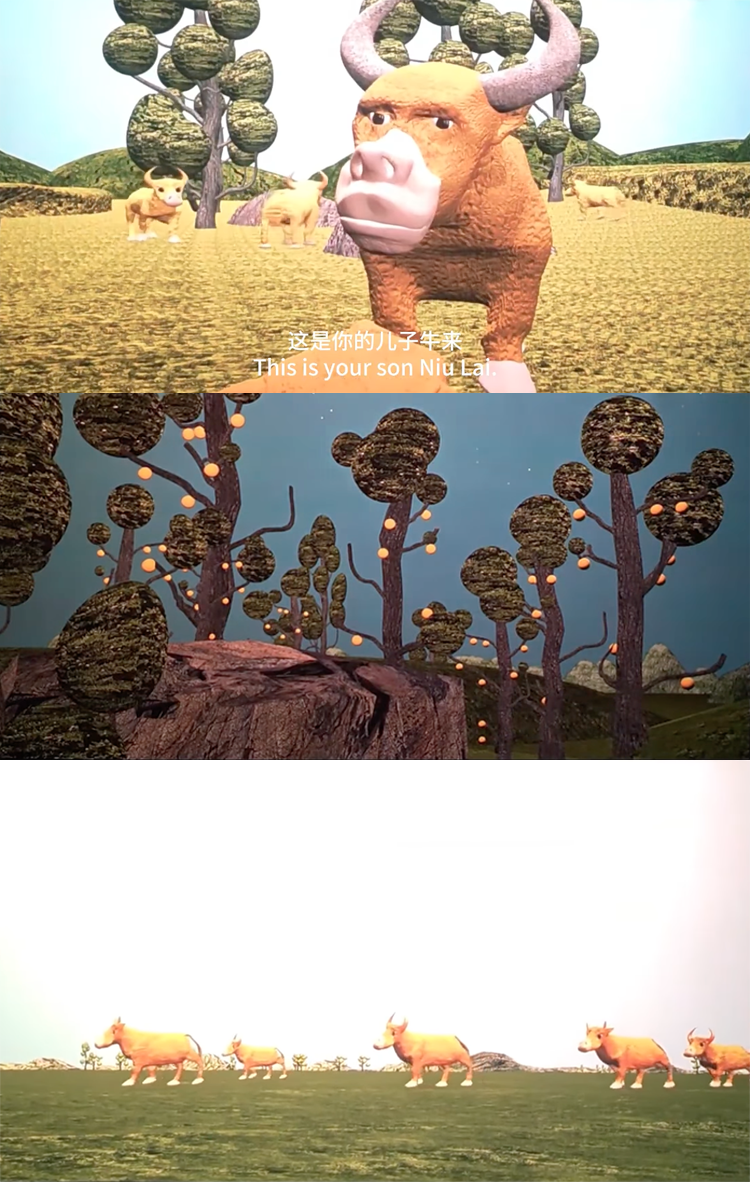
Stills from Niu Lai
Among other displays of the Niu Lai fandom, there are many Chinese social media users recreating scenes from the film, wearing scrappy hand-made costumes and imitating the characters. Outside of China, the only way one can watch Niu Lai is on websites like YouTube, phone-recorded off Chinese theater screens.
When watching cam-ripped uploads of Niu Lai, one can often hear audiences laughing at the movie; a great way to get clued into a sense of humor shared by many of the educated youth in modern Chinese society, who are aware of subtle aspects of a film’s formal delivery as an invisible signifier of production method. This is similar to culturally aware audiences in the USA, who might laugh at something like a Tim and Eric sketch, which is devoid of “traditional jokes,” but humorous for how it has been edited: inclusion of inappropriate shots and unconvincing compositing, or performance nuances and unannounced references to behaviors of “weird people.”
The moments in Niu Lai that audiences often laugh at, as if they are specific jokes, are concisely delivered formal failures such as bizarre line deliveries, long pauses, off-kilter facial expressions, the strange nuances of a character’s pose, etc. These performance nuances are often matched quite accurately by the social media users who cosplay as Niu Lai, an aspect of the cosplay that’s more important than the costume itself, the purpose of which is a material analogy to the poor quality of the film. It’s clear that there’s specifics of what people find so funny about the movie, and a blanket statement of “they laugh because it’s bad” doesn’t convey the nuances.
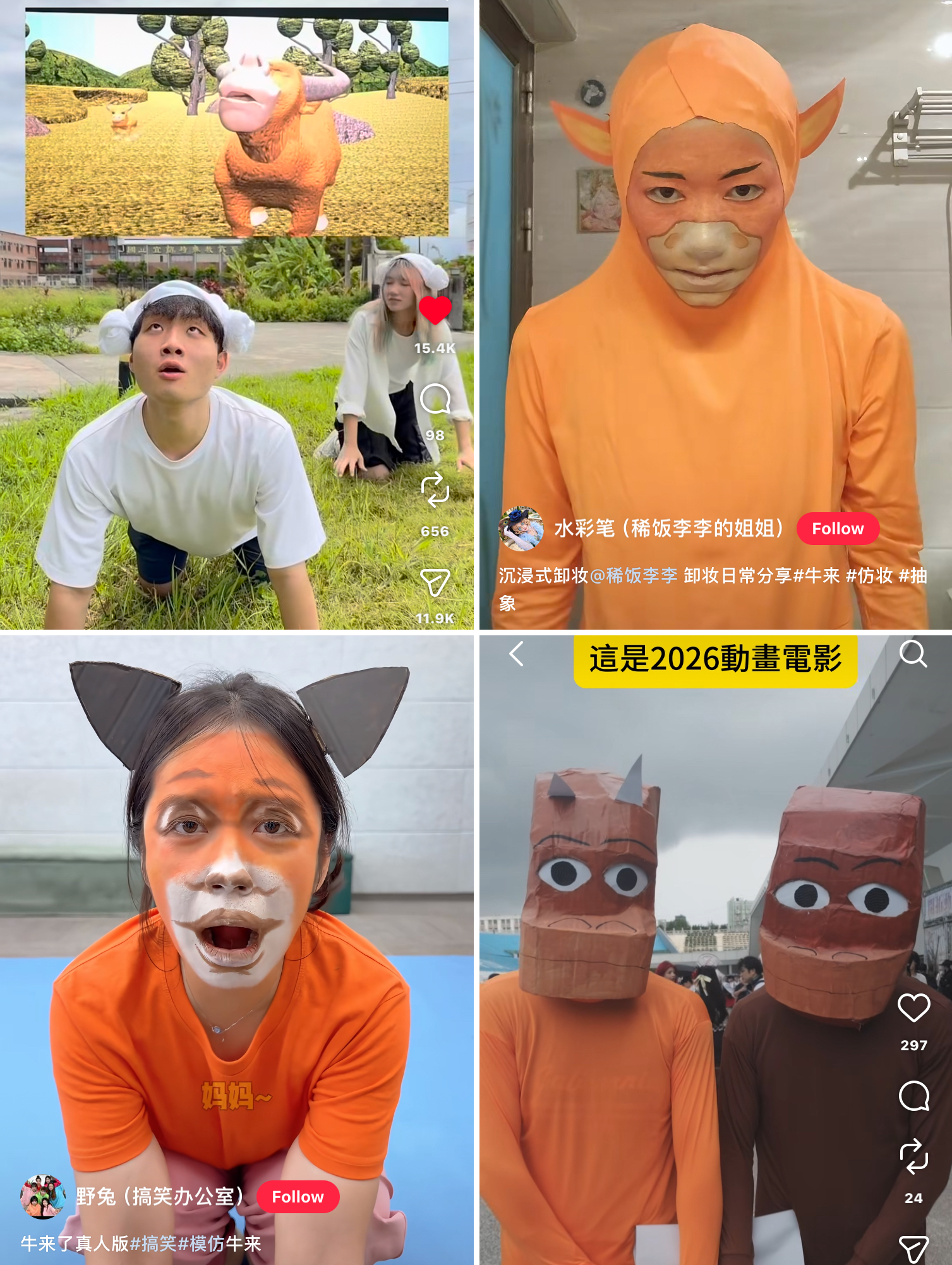
Chinese social media users cosplaying as the characters of Niu Lai
This also points toward an interest within China of something similar to “camp aesthetics”: which could be defined as an ironic appropriation of cultural artifacts that are widely considered “low-brow” for the sake of artistic intrigue- Interestingly, the Chinese equivalent of “camp” has been developed in a different cultural context, timeline and with different social symbols than how it developed in the US (this is something I plan to write about in the future). All this to say, audiences in China are often partaking in culture on many different levels of signification.
Niu Lai’s opponents dismiss the commotion around the film, but I believe it’s helpful for parsing the broad dissatisfaction in China with so much local media. In my view, the Niu Lai phenomenon reveals the problems of any media landscape that’s skewed toward conservative or “safe” projects. Unintentionally, it shepherds many viewers toward entertainment that might be considered “bad” by “common-sense” standards, but that provides more intellectual stimulation because it encourages critical analysis.
“Making it” in China’s mainstream industry takes stamina and arduous training, and expectations regarding technical skill are quite high. Artists who might otherwise succeed are often systemically excluded. That, coupled with the business’s preference for “safe” films, drives many unorthodox Chinese animators to study in foreign countries, where they feel that their subversion of formal norms might be more readily embraced. I believe that these artists, like the ones interviewed later in the piece, would greatly improve the animation landscape in China if they were encouraged to create animated projects that reflect their artistic sensibilities via work opportunities.
There’s worry in China’s animation scene that its films and series attract too small of an international audience. This insecurity seems strange at first glance. The global recognition of Japanese animation is the common comparison within this type of discourse, despite being politically unrealistic; Anime’s global recognition would be difficult for China to achieve in current geopolitics, as there are restrictions on its exports. This also seems to downplay the massive domestic box-office success of Chinese animation in China. However, a notable contingent of viewers go to these films simply to support domestic animation, or “because it’s there” and options are limited.
This is another aspect of why Niu Lai is interesting: it’s Chinese animation that caused natural excitement within China to the point where international audiences became interested to see if they could “get in on the joke,” showing crossover to international markets is possible, but it seems that it must be under the circumstances of natural excitement from the domestic audience; who are increasingly intelligent film viewers looking to be surprised, who are interested more in the subversion of comedy, presentation and tone than in large-scale grandeur or stories that feel too familiar.
Personally, I was captivated by Niu Lai’s visuals precisely because they were created by an untrained animator. He lacked the skills and tools to make a traditionally “good” image, and yet he persisted anyway, out of sheer passion. I knew that I was watching a beginner figure out ways to express his vision as he went, which led him to contextually smart artistic decisions, since he was working with software not designed for character animation.
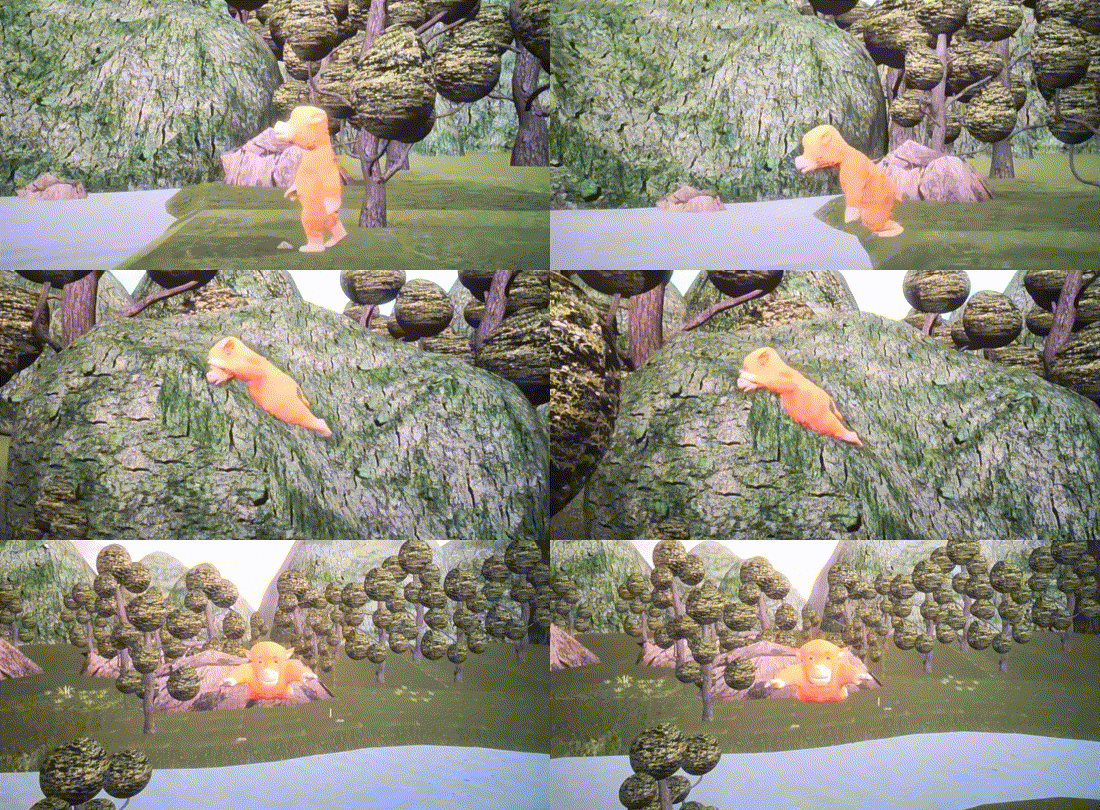
A moment from Niu Lai
While Niu Lai is not in line with standards of modern big-budget animated films made by giant teams of highly trained professionals, I wonder: For the people who want to remove the film from theaters for “not being good enough”, what would make the film acceptable? If the creator had gone to animation school, destroyed the outsider sensibilities that made his work interesting, and created a polished and boring version of the same film? Aren’t there other ways for art to be valuable?
That’s a question Shangshan Ruoshui (上善若水) has decided to explore, through “Most Trash Animation Festival”. On the official Most Trash website, a banner reads: "What counts as good? What counts as trash?” Shangshan Ruoshui and her Most Trash affiliates are concerned with the state of animation film festivals and the animation industry at large, deciding that the judging criteria of what makes a film “good” have been revealed to be arbitrary. Since the first event at the end of 2025, they have held over 20 screenings all over China, plus screenings in Japan, USA, Estonia and Thailand.
Koji Yamamura, known for the 2002 film Mt. Head, reflected on Instagram about his live conversation with Shangshan Ruoshui at Hiroshima Animation Season 2026: “The curators were driven to create this program by the frustration of seeing impactful, captivating works overlooked due to conventional standards. This program re-examines the value of animation through the lens of finding work that is wild, mind-blowing, or unconventional, rather than simple "good" or "bad" judgments. It drew a large crowd, requiring the use of extra seating”.
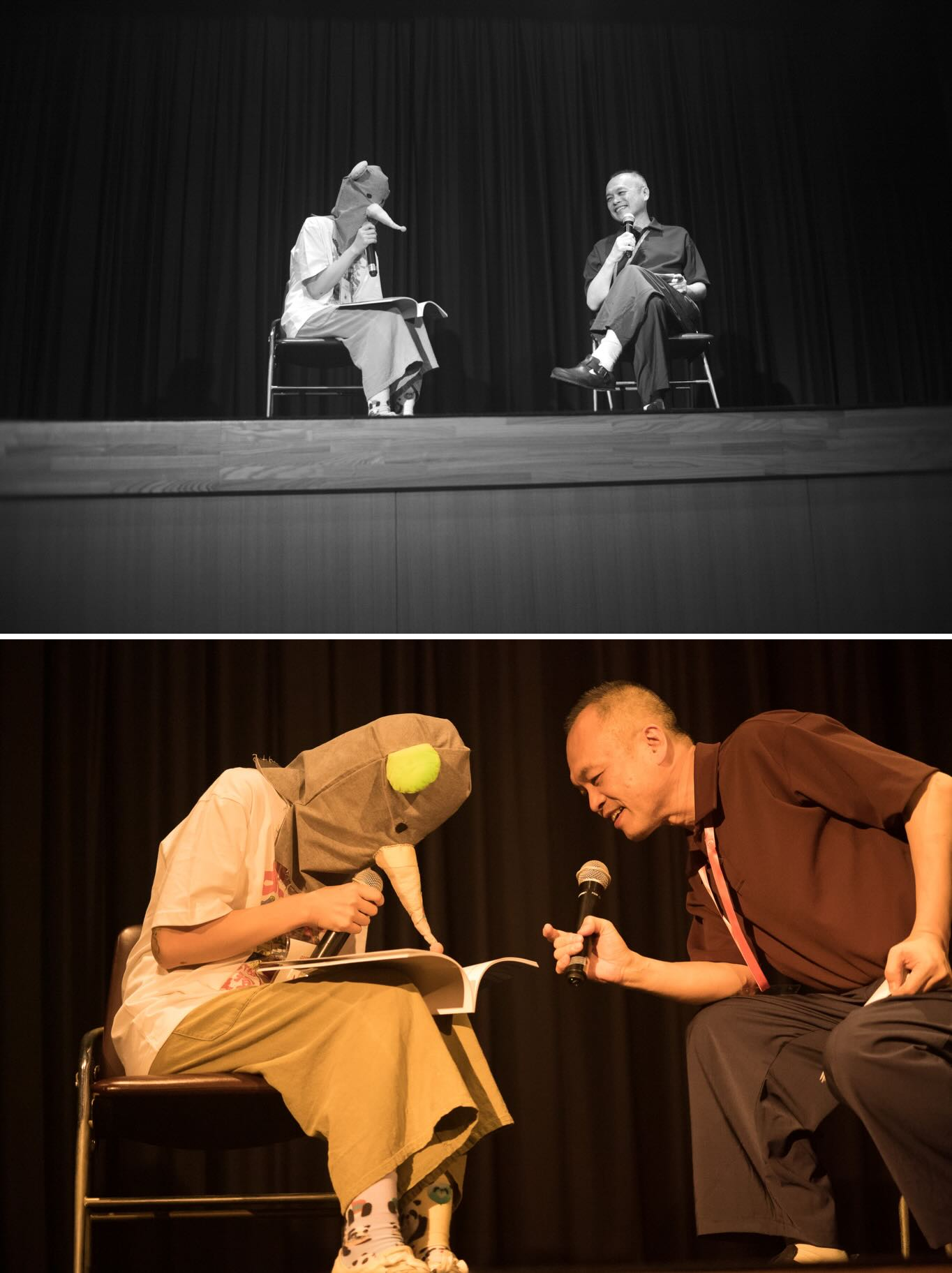
Photos from the conversation between Shangshan Ruoshui and Koji Yamamura at Hiroshima Animation Season, courtesy of Yamamura on Instagram
Shangshan Ruoshui tells me about why she started the festival: “I was guided by a mysterious force. After watching an incredibly well-made animated film with my younger brother, my first reaction was: bored. Was it boring because it was too perfect? Choosing to fight that boredom in the form of Most Trash came from a frustration that had been building up subconsciously for a long time; a certain dissatisfaction I had developed with the very concept of a film festival.”
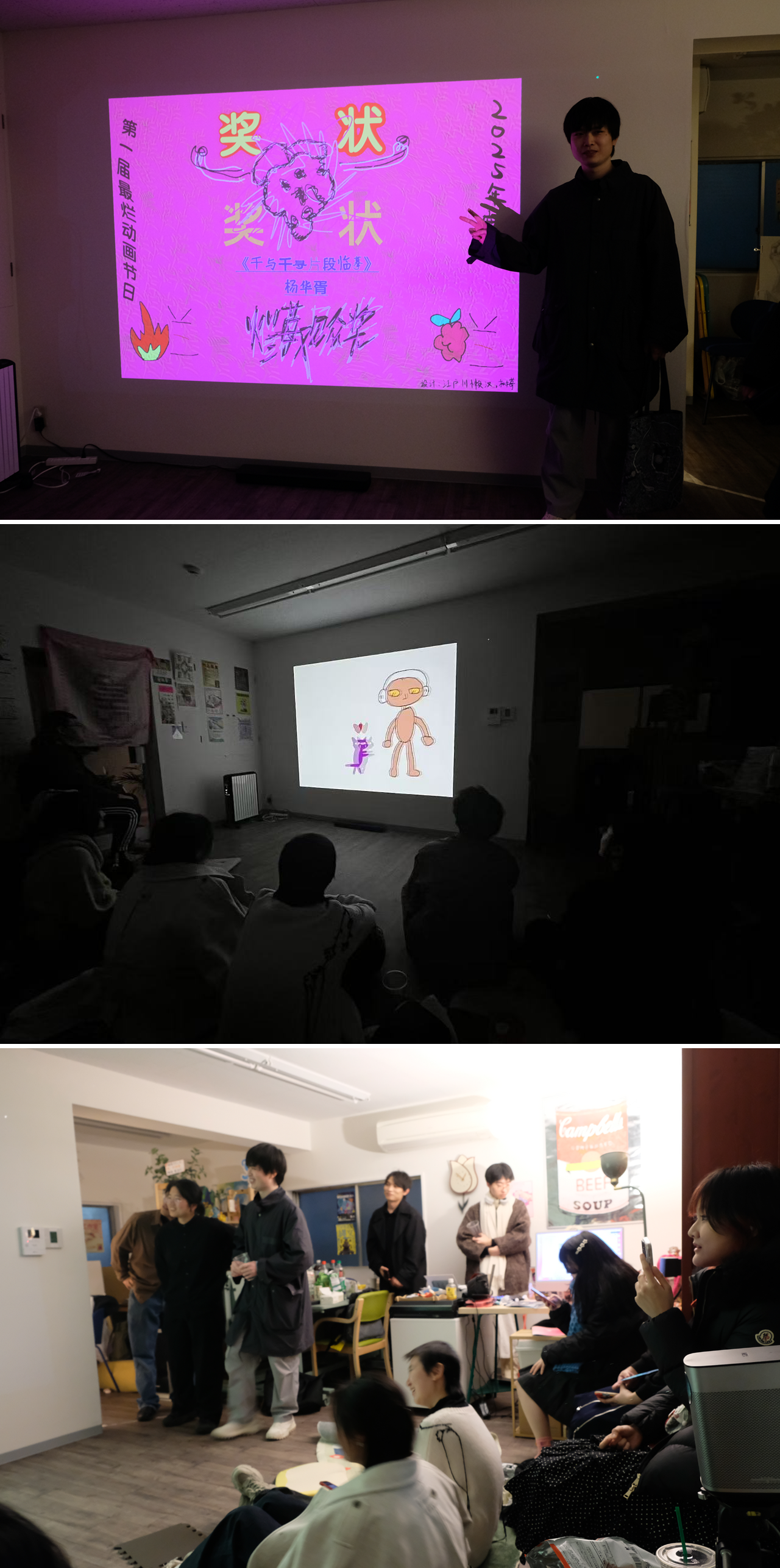
Pictures from the first Most Trash event held at the end of 2025, courtesy of the festival’s website
Shangshan Ruoshui’s interest in “trash” revolves around bringing nuance to how we think about animation, and finds that trying to give it a concise definition ends up being somewhat problematic: “I don’t want to know too quickly what ‘trash’ is. It’s something we can keep returning to, playing with, questioning, and even use to overturn our own previous judgments.”
It becomes important that each viewer has their own definition of “trash”, and evaluation criteria changes from jury member to jury member. The jury often contains important figures in the Chinese independent animation scene, who each grapple with their own concepts of "good" and “bad” differently.
A jury member for the first festival, Shen Jie, creator of films like Stammer (2013), said this in his statement: “I felt a festival like this needed to exist, and I was delighted someone actually made it happen!”
Jiali Tan, who recently premiered his film Won’t Be Here at Annecy, said in his jury comment: “This is a new experience for me, because no one ever taught me how to make a bad film, so I found that my knowledge of ‘trash’ is basically close to nothing”.
Li Zehao, known for her films Hippocampus and Tunnel Wandering, said this: “I appreciate the humor inherent in the idea of this festival, but we also engaged in serious discussions around aesthetics, the nature of animation, and the future of animation festivals. The fact that this attracted so many submissions demonstrates that people aren't simply trying to ‘embrace mediocrity’ or ‘slack off’; rather, they are seeking to re-examine their values, standards, and modes of viewing.”
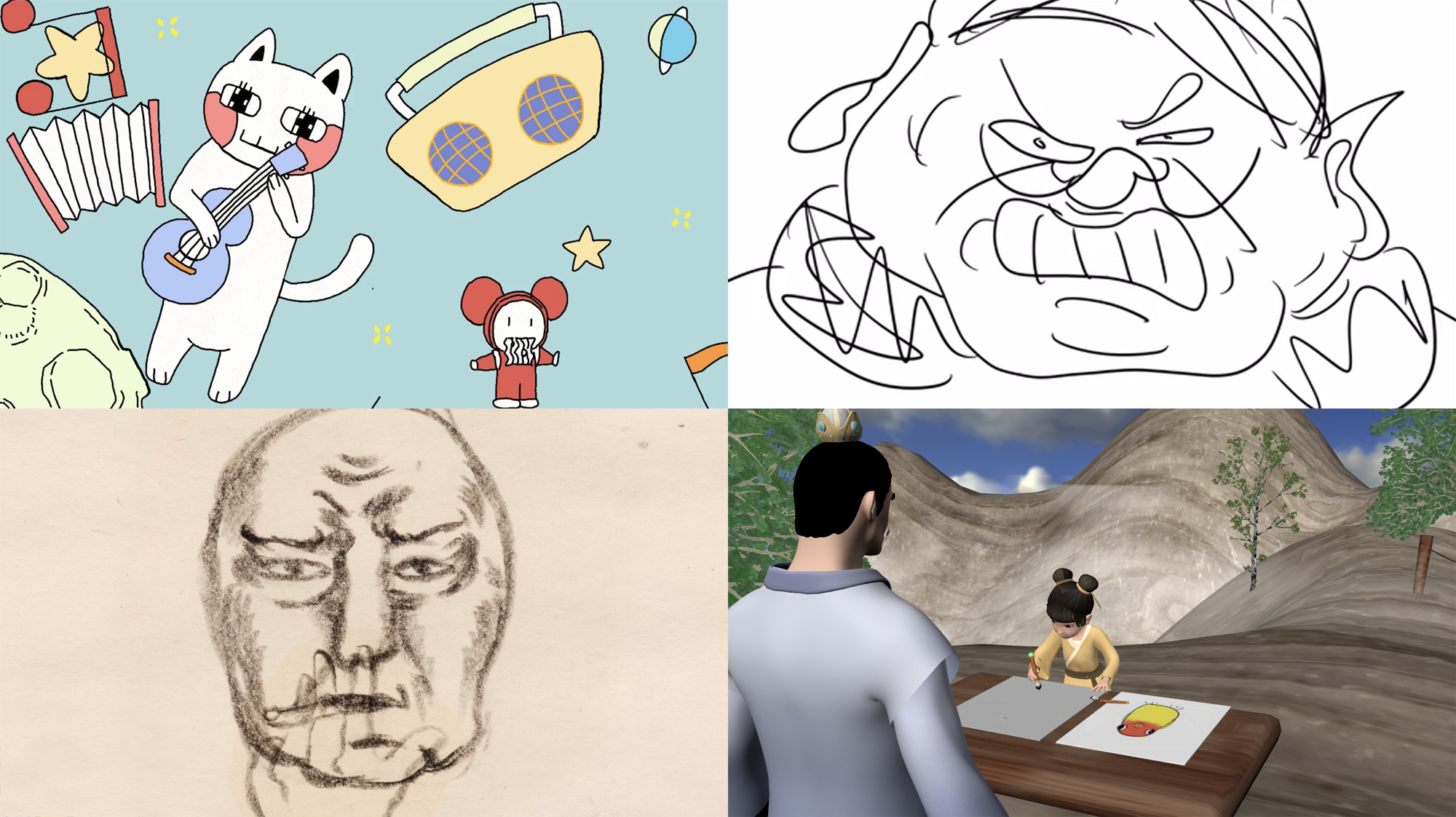
Stills from films that have “won” at Most Trash
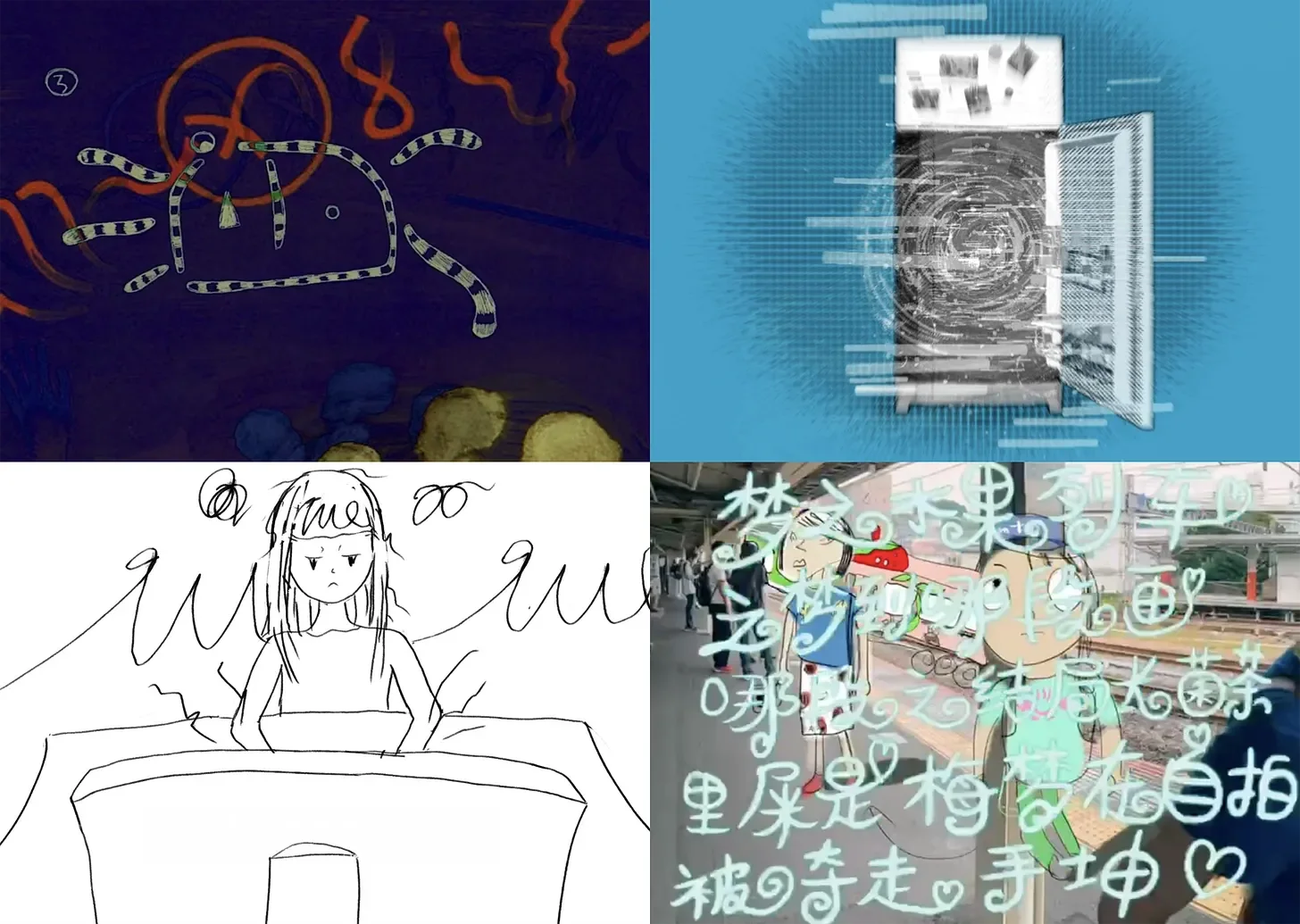
More Most Trash “winners”
A snippet from CharlieKillers (2022), one of the major “winners” at Most Trash. Available on Bilibili.
Shangshan Ruoshui unpacked her views on the Chinese animation industry to me: “There’s a vitality that feels both good and bad. With mainstream animation in China, I think a lot of things are missing: good project development, good producers, good stories, good audiences, and a mature market. Most importantly, there isn’t enough time or space for creators to experiment, fail, and grow.”
“People have gradually figured out what investors want to see and what kinds of projects are more likely to get funding, and the market has become dominated by these types of safe projects. The environment expects a work to immediately arrive as something that can be sold, promoted, and make its money back. Once one kind of film succeeds, a wave of similar projects quickly follows. This is not because of the stereotype that ‘Chinese creators lack imagination,’ it’s because capital looks for certainty, even in an unstable market.”
“Simultaneously, quite a few independent animators are moving into commercial animation, but they have a lot of creative energy with nowhere to put it. It’s hard to blame anyone, because Chinese animation has a different market, audience, and industrial environments to Japan, Europe, or the US. Interestingly, because the market is still young (and sometimes quite harsh and chaotic), it can produce works that might never emerge from more established commercial systems. There are still a lot of problems, but the industry hasn’t settled into a fixed shape yet.”
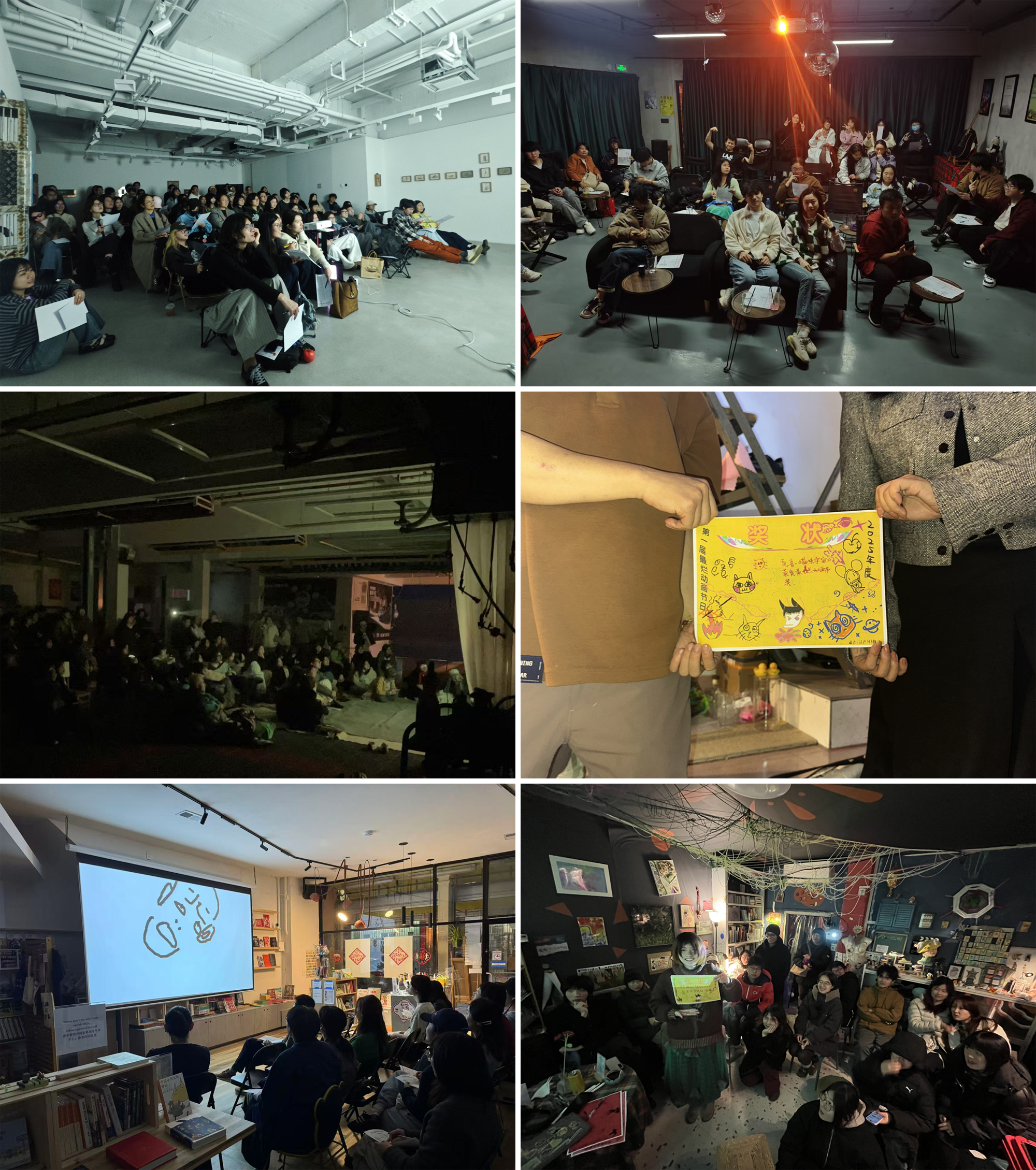
Photos from Most Trash events held around China and internationally since the end of 2025, courtesy of the festival’s website
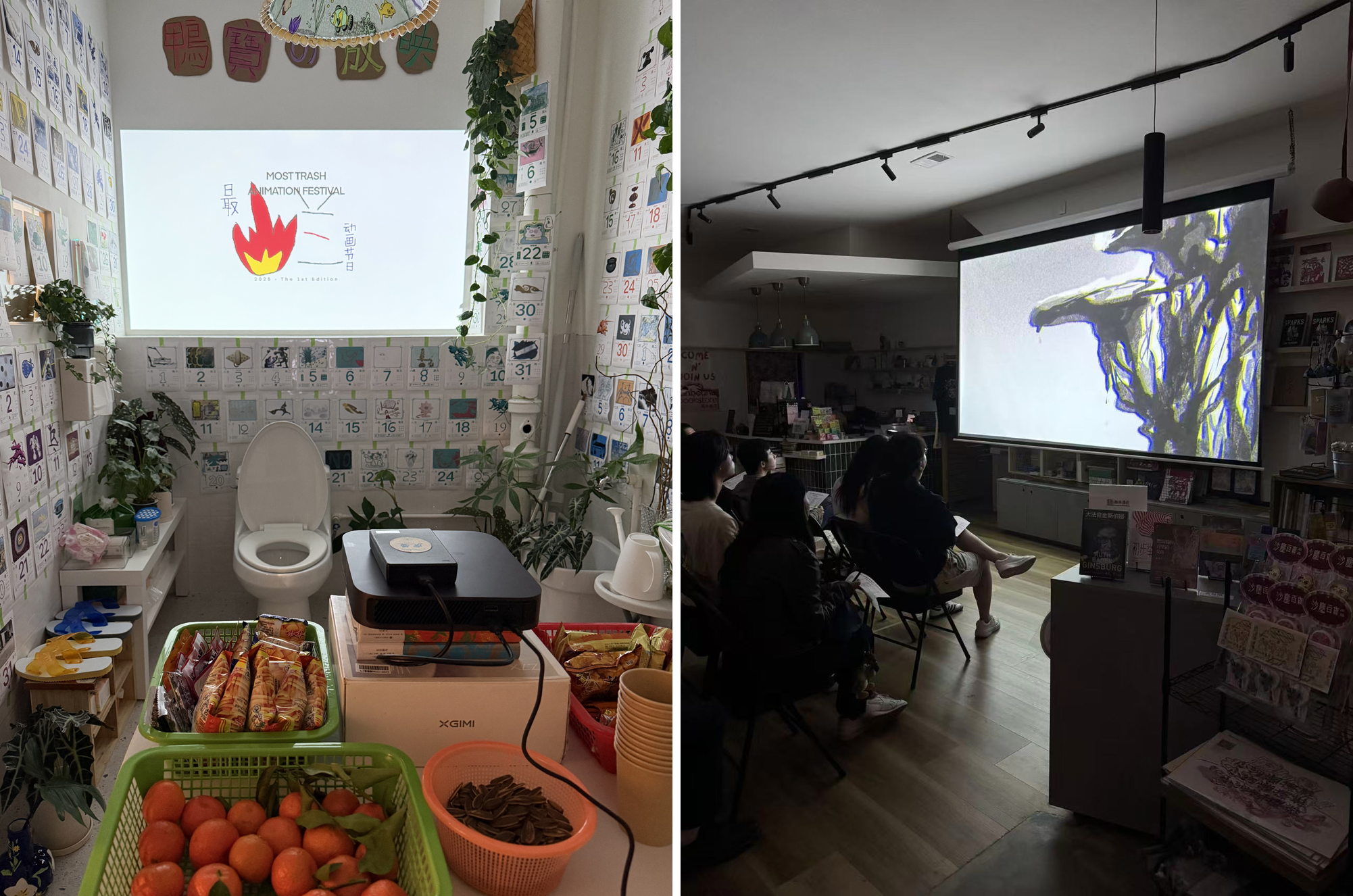
More photos of Most Trash, courtesy of the website
Niu Lai has an obvious appeal to those involved with Most Trash, and the jury member Sijia Luo has declared her love for the film on social media. “I laughed at the beginning, but fell silent in the second half, because my brain gradually adapted to the director’s unique language,” she wrote. Sijia elaborated to me: “I wanted to watch it the moment I heard about it, it felt inspiring: this was a lucky case of an independent animator working within limited means and making a film in their own distinctive voice, and succeeding! I watched it with a group of animators during a festival. We were exactly the type of people to resonate with a film like this.”
She continues: “Some industry people criticized Niu Lai for disrupting market order; and some directors even developed real resentment toward it, since they put in so much effort and still couldn’t achieve the same level of response. But more than half the people I watched it with were Japanese, who hadn’t been exposed to the discourse around it, and they were still moved! I think this speaks to the power of the film itself. I imagine it gave courage to a lot of people who want to make their own films too.”
I first met Sijia at the New Chitose Airport Festival in Japan. When she found out I was from the USA, she instructed me to look down at her foot, and slowly took her shoe off to reveal Kenny from South Park on the inside, causing me to scream.
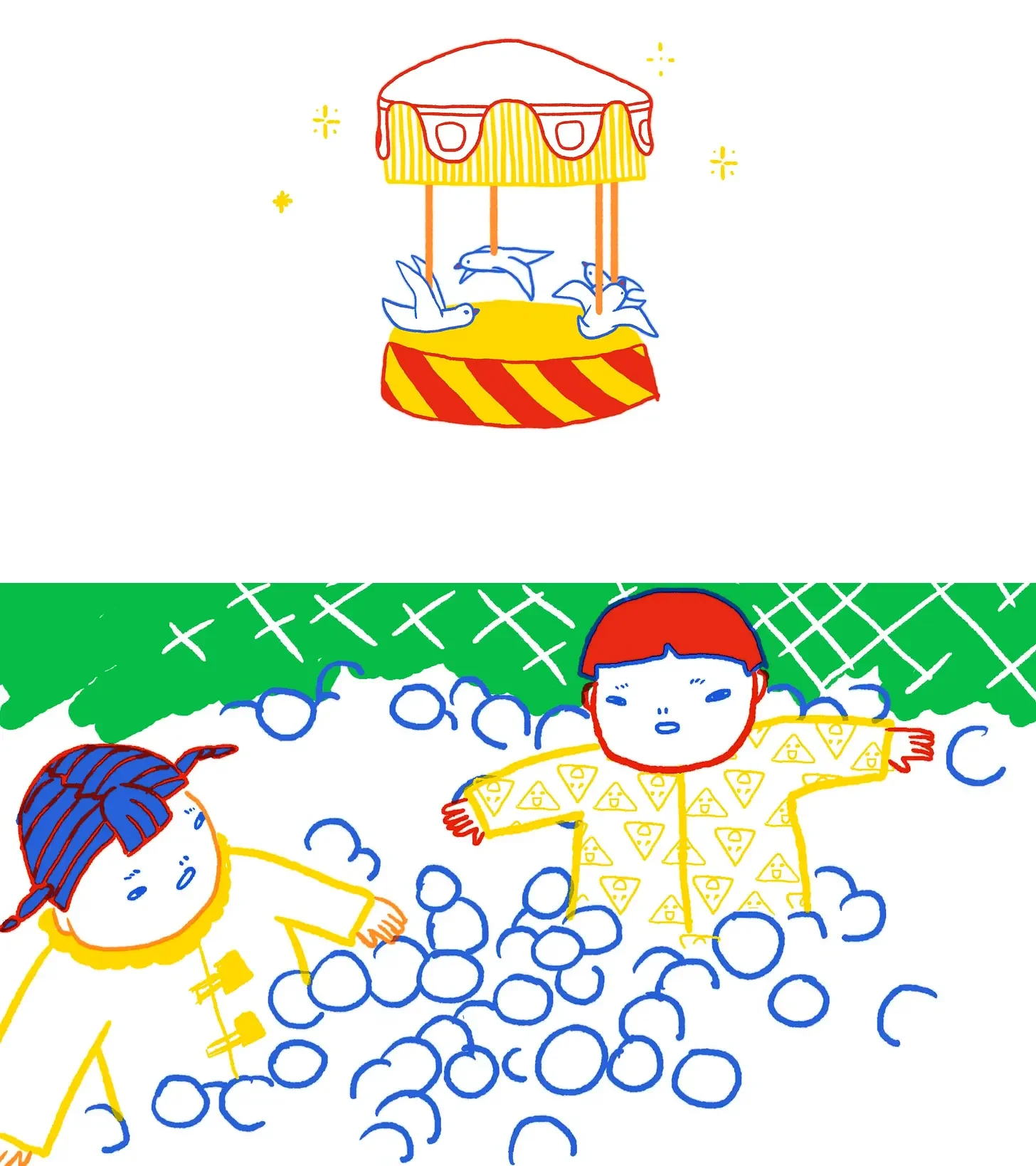
From Sijia Luo’s film So Red and a Little Blue
A few months later, after teaching me how to VJ at an event we put on with our friends in Tokyo, she told me that when she was a middle schooler, she would watch South Park via fan-subtitled illegal imports of the show, and it became one of her greatest influences: “As a kid, even though most of what the show talks about is America-related, with China only coming up occasionally, I found it fun. However, looking back now, it definitely shaped my sense of humor, critical thinking, and how I think about political expression. Because the visuals are so simple, it made me take what animation actually says more seriously, rather than focusing on surface-level polish. Though I think it probably left me with some negative influences too, like a tendency toward cynicism… that’s something I’m trying to fix.”
“I came to Japan for grad school, and honestly I can’t really imagine how I’d survive as an animation director in China, because my career really did develop in Japan. Even though I sometimes get collaboration opportunities from China, because of how the culture and industry have developed over time, there are simply more job opportunities for independent animation directors in Japan. However, recently I’ve gone back almost every year for the Feinaki Animation Week. Maybe China is catching up?”
“When I’m making a piece, I usually give myself a rule or constraint, such as using a certain technique, a certain odd element, and that becomes a kind of container for the work to go inside of. Then my thoughts are like a pinball bouncing chaotically inside that container, and the shape of the pinball’s path inside of the container becomes the work. I’ve also noticed lately that a lot of my work actually comes out of negative emotion; doubt, irritation, even anger, while at the same time I want to use animation to reach to other people and areas. It’s a contradictory state, both pushing away and longing to connect.”
From Sijia Luo’s film Time Autobahn
Another animator who rejects mainstream ideals in Chinese animation is Pang Wen. As you can see from Pang’s Geidai thesis film, Alienhuman, she is a versatile artist, able to create work that is rough and crazy, other work that is breathtakingly beautiful, and work that is both at once.
Pang reflects on jurying for Most Trash: “There was one film we watched that didn’t do anything wrong. In fact, an ordinary audience might watch it and wonder, “How did this even get selected for a ‘trash’ festival?” But I felt that there was no real thinking behind it, and it didn’t communicate any sense of the filmmaker’s perspective. That’s why I thought it was “trash,” in this case, trash in the negative sense. I regret not choosing it for a jury prize.”
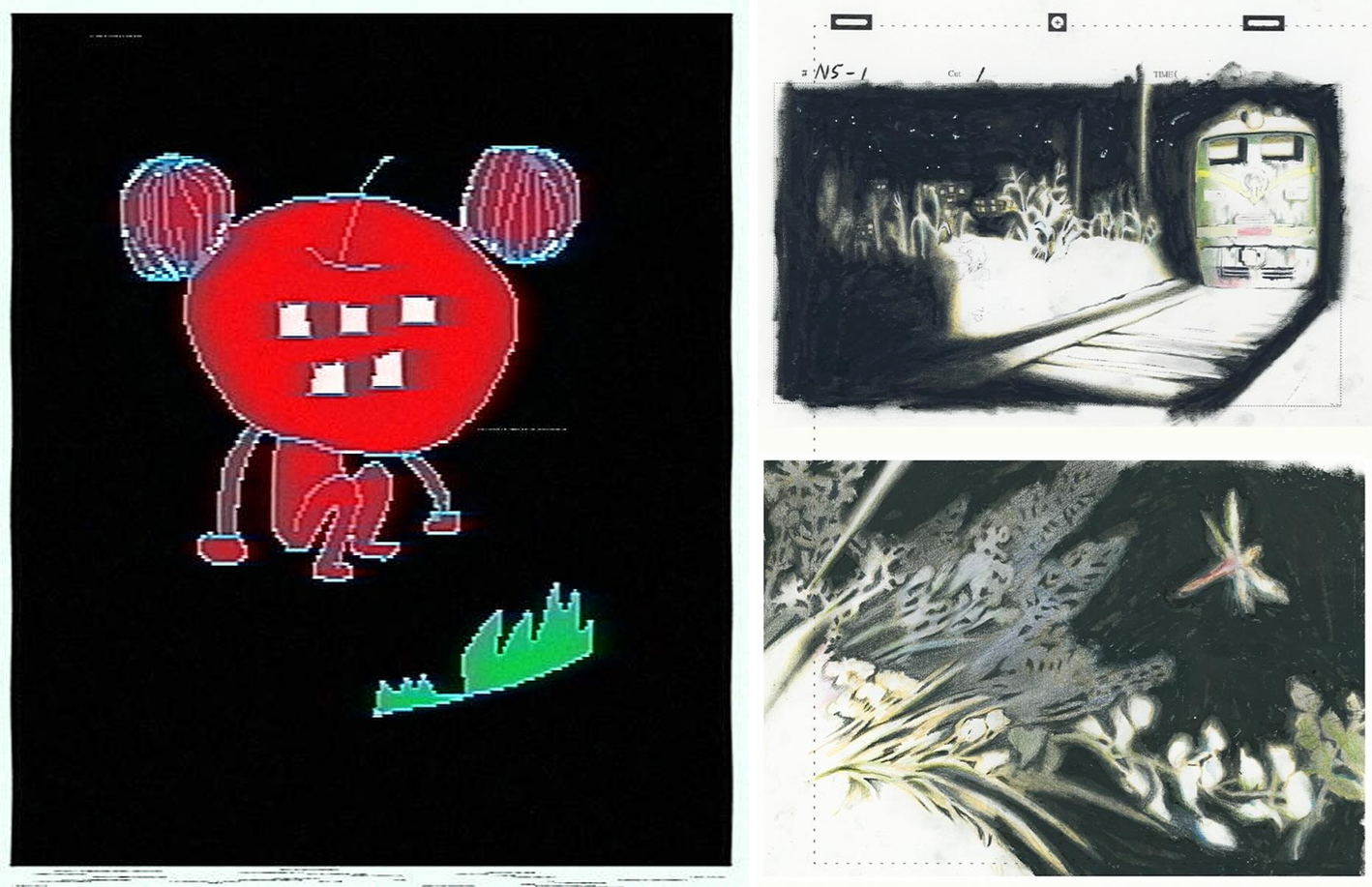
Examples of Pang Wen’s artistic versatility, courtesy of her Instagram account
“I went to undergrad at Central Academy of Fine Arts in Beijing for Digital Media. Most of my time was spent hanging out, and I met a lot of friends from the underground scene. I thought they were so interesting and fun that I wanted to make a documentary about them! So from my second year onward, I mainly worked in documentaries, and in my third year I finished a documentary called Ourself. During my third or fourth year, Koji Yamamura came to give a lecture at my school. I spoke some Japanese, so I was asked to interpret. That was my first encounter with independent animation. I saw the graduation films from Geidai’s program that year and was blown away. So I decided to follow Yamamura-sensei to Japan, haha.”
“I think the biggest difference between my experience in China and Japan was probably the size of my projects. In Japan, my work became smaller, and more personal. I became increasingly restrained, partly because of that Japanese sense of politeness, of trying not to disturb other people. I don’t think that change was necessarily a bad thing, but I don’t think it was entirely a good thing either.”
“I like the tactile feeling of working by hand. My priorities in art are pretty simple: I want to have fun making it, and I want people to praise me.”
A snippet of animation from Pang Wen’s Alienhuman, available on YouTube
One of my favorite animators is Yingdan Lai. Yingdan’s films Little Dan, Fish and One, Two, Three, Four, Five, Six are wonderful meditations on Yingdan’s childhood in China, using warped drawings to great effect.
Yingdan has been studying and working in the United States since 2023, but is very excited about Most Trash and Niu Lai: “For a long time, Chinese audiences have wanted art that isn't just polished on the surface, but instead carries its own attitude, something you can actually feel. The rapid development of AI is only making that desire stronger. Making art in China is moving away from constant imitation and the pursuit of refinement and polish, toward simply expressing oneself. What's been missing is just a group of people willing to step up, put it out in the open, and actually talk about it and validate it. It's meaningful for me to see that kind of work reach a wider audience.”
A GIF animation by Yingdan Lai, courtesy of her website
Yingdan goes into detail about her unusual road to animation: “Becoming an animator was an accident. I loved movies, but within China's art evaluation system, I did not have the drive to come out on top. Most kids who wanted to be artists entered a rigorous training system very early. I just doodled in sketchbooks. I didn't start serious training until right before my college entrance exam. Though I was painting what was required, I was doing it just to get into art school, and I did not let myself get trapped in the painful grind of repeating that exam-prep content over and over.”
“I was originally supposed to study sculpture, but I was randomly assigned animation as my major. My thesis film’s topic had to be chosen from an assigned list, so I picked a topic about a virus that affects children, because I wanted to make a film about kids. I found my own thing within the constraints. I hit limits throughout college, and I felt unsatisfied, like there was more I wanted to express.”
“The moment I got excited about animation was when I made my film Little Dan, which was when I realized animation could be ‘one-person filmmaking.’ Once you had an idea, you could just go for it and see what it turned into. That rush was real. It made me decide to keep making animated films and officially call myself an animator. After I got to CalArts, my teachers and friends told me they could see a strong voice in my work. That made me even more determined to keep exploring.”
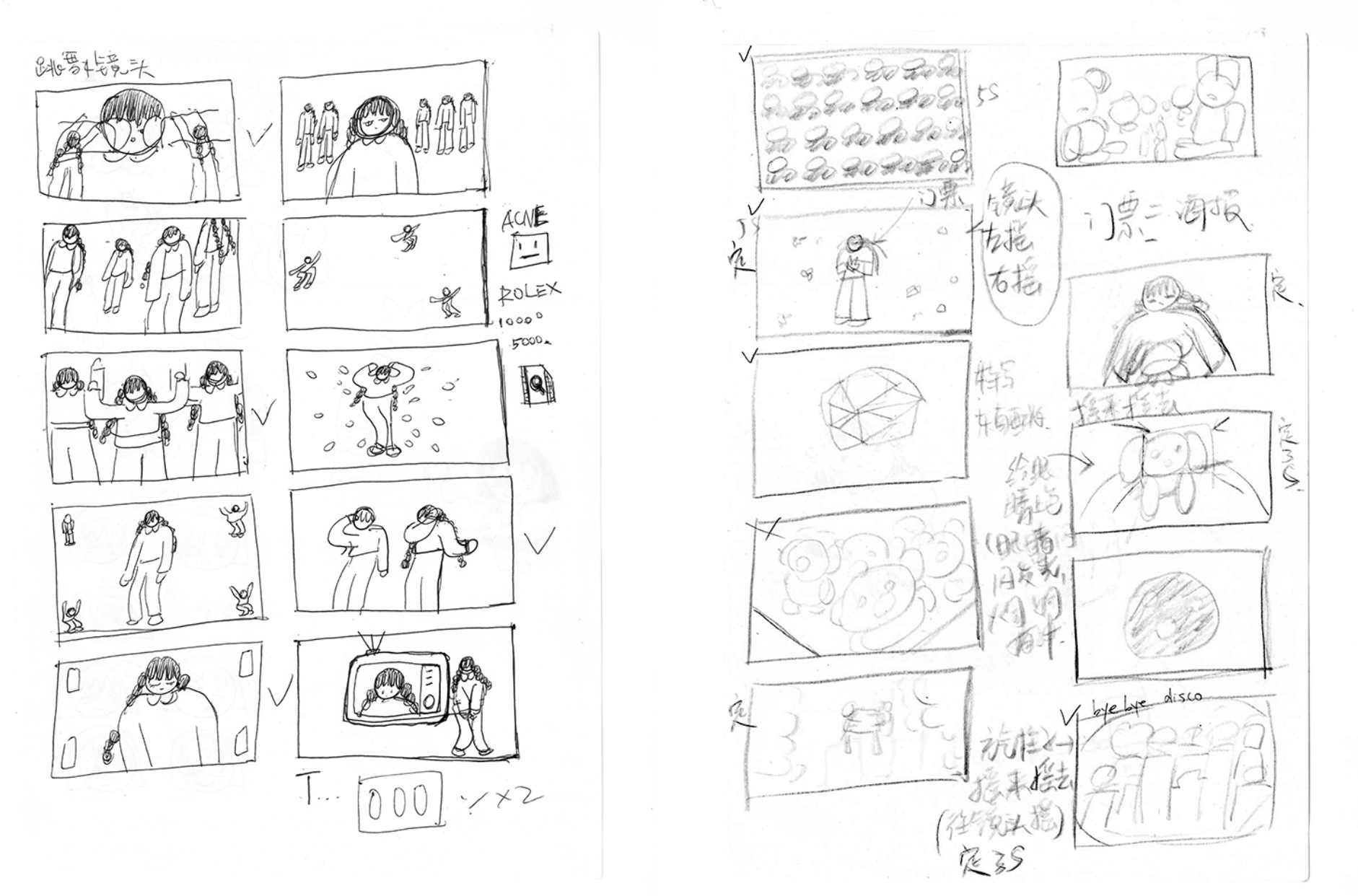
Storyboards from Little Dan
“When I'm animating, what excites me most is the dynamic energy, whether that's tension in the storytelling or the real movement of facial expressions. So I don't really pay much attention to complex character or scene design. In my eyes, things are fluid. That fluid way of seeing might be part of what shaped my ‘style.’ I don't aim to make it look polished, or to make sure any single still frame looks pretty. I think what I really care about is whether it feels right once this animated world starts moving according to its own particular logic. Even if a single frame looks crude or unexpected, it contributes to the dynamic as a whole. Because I'm following the logic of movement itself, rather than chasing a ‘correct’ answer frame by frame, I ended up creating a world that feels more pure, and in some ways, more real.”
A snippet from Yingdan Lai’s CalArts student film Fish
I wanted to showcase some of my friends who go against the norms of animation in China, to gesture toward the variety of artistic voices there truly is. I also want to underline how a lot of the issues independent animators face in China are quite similar in essence to issues animators face in the US and elsewhere, despite differences in cultural contexts.
The success of Niu Lai, to me, shows that the time has come to promote Chinese animators who create their work in a genuine way. Audiences are eager to see personal artistic expression from eccentric voices. Niu Lai, for all its “flaws,” makes us ask of the current moment: Where are the underdogs? Where are the ones who risk it all for the sake of creative expression? Where is the fun? Where is the trash?
September 2026